Into the Gut
The gut, or digestive system, is highly reliant on the proper functioning of the intestines. Here’s everything you need to know about this intelligent organ.
What are the intestines?
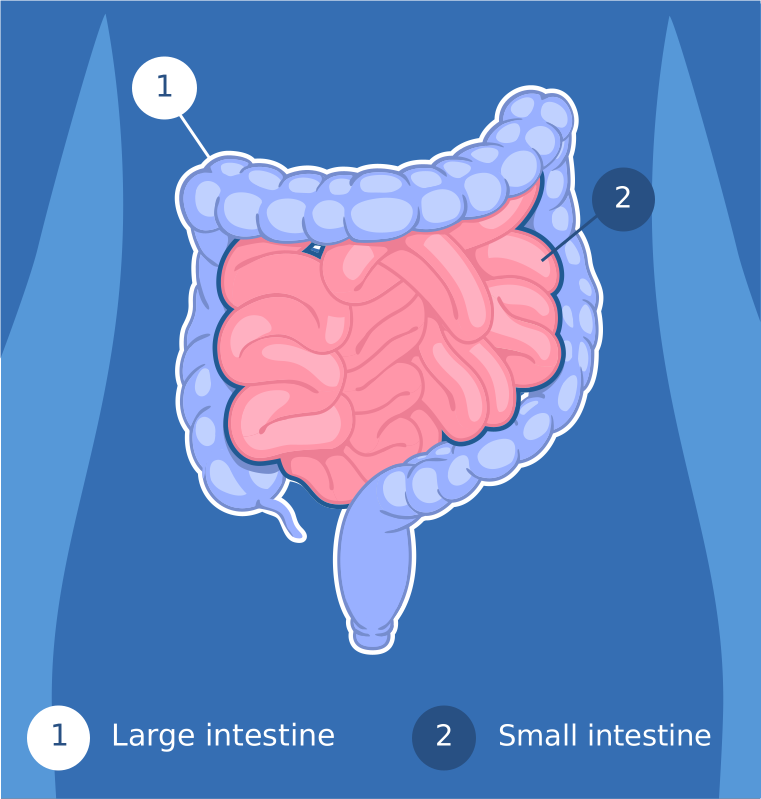
Your intestine is divided into two parts: the small and the large. They are tube-like organs that live in the lower abdomen, between the base of the stomach and the anus.
How do they work?
The intestines work through muscular movement and absorption. They motion food and water through the digestive system, so that nutrients can be delivered into the rest of the body.
Why are the intestines so important?
The intestines absorb essential nutrients from food and water, as well as facilitate waste excretion. They complete the journey of digestion, which is an integral part of your overall health and wellbeing.
The Small and Large Intestine
Upon leaving the stomach, food and water enter into the small intestine, where they begin the journey toward the large.
The large intestine is the finale to the digestive process. Components include the appendix, cecum, colon, and rectum.
What is the small intestine?
The small intestine is a tube-like organ that measures an average of 6 meters long (20ft). Most of the digestive process is carried out in this part of the gut.
The role of the small intestine
The small intestine is also known as the small bowel. It pulls the majority of nutrients from food and delivers them directly into the bloodstream for the greater benefit of the body.
What is the large intestine?
The large intestine is a tube-like organ that measures an average of 1.5 meters long (5ft). Mostly made of muscle and tissue, the large intestine facilitates digestion.
The role of the large intestine
The large intestine is also known as the large bowel. It completes the digestive process by absorbing water and any leftover nutrients from food. Here, waste is transformed into stool and expelled through the anus.
How can rebalancing your intestinal flora help solve your gut problems?
When consumed regularly, good bacteria, such as Bacillus clausii, can work to rebalance the intestinal flora in the gut. A balanced gut lessens risk of gut disorders such as bellyache, abdominal discomfort and bloating.
Gut Disorders in Adults

Diarrhea’s Impact on Health
An unbalanced gut has the tendency to leak, and the result is watery bowel movement. Triggers commonly include viral and bacterial infection, some foods and medications.

Antibiotic Effects
Antibiotics affect the gut by inadvertently affecting even the good bacteria. Side effects include abdominal pain and diarrhea/ constipation.

Common Bellyache
A most common gut disorder, bellyache can be triggered by an imbalance in intestinal flora. Indigestion and food sensitivity are to be expected.

Lazy Gut, Lazy Life
A condition of various triggers, whereby the gut becomes slow or sluggish. This condition involves constipation and/or painful bowel movements.

The Bloating Experience
Excessive gas in the gut will cause visible bloating and abdominal discomfort, usually alongside constipation.

Dreaded Dysbiosis
A condition caused by maladaptation within the intestinal microbiota. Dysbiosis may cause anything from foul breath to rectal itching.

Gut During Pregnancy
Estrogen and progesterone affect normal gut function while the body is creating life, causing nausea, constipation, gas retention & discomfort. May lead to imbalance. Consult HCP before using any probiotic/EG.
Gut Disorders in Children

Diarrhea’s Impact on Health
Leaky gut is common in kids when the intestinal flora is unbalanced, making them vulnerable to infectious diseases like diarrhea.

Common Antibiotic Effects
Antibiotics can improve overall health, but may eradicate good-bacteria in the process, leading to cramping, nausea, and watery stool. Children are more sensitive to this than adults.

Dealing with Bellyache
Bellyache is a common occurrence in little ones; the array of triggers for this condition are immense. Learn how to identify and treat them.
Our Products
Erceflora® aims to prevent or help recover from a number of conditions associated to poor intestinal wellbeing as a result of imbalance microbiota for both kids and adults.
Gut disorders triggered by one or more of these scenarios can be prevented by taking Erceflora® Gut Defense daily. Symptoms can also be alleviated by taking Erceflora® Gut Restore as soon as they manifest.
-optimized.be3dd197f30d3bf520107c0b2874ad67.webp)
.2026-01-26-14-53-58.webp)
Stay Informed
Learn how different daily triggers could be contributing to intestinal disorder, and how a good probiotic could be the ally you never knew you needed!